 By Rehan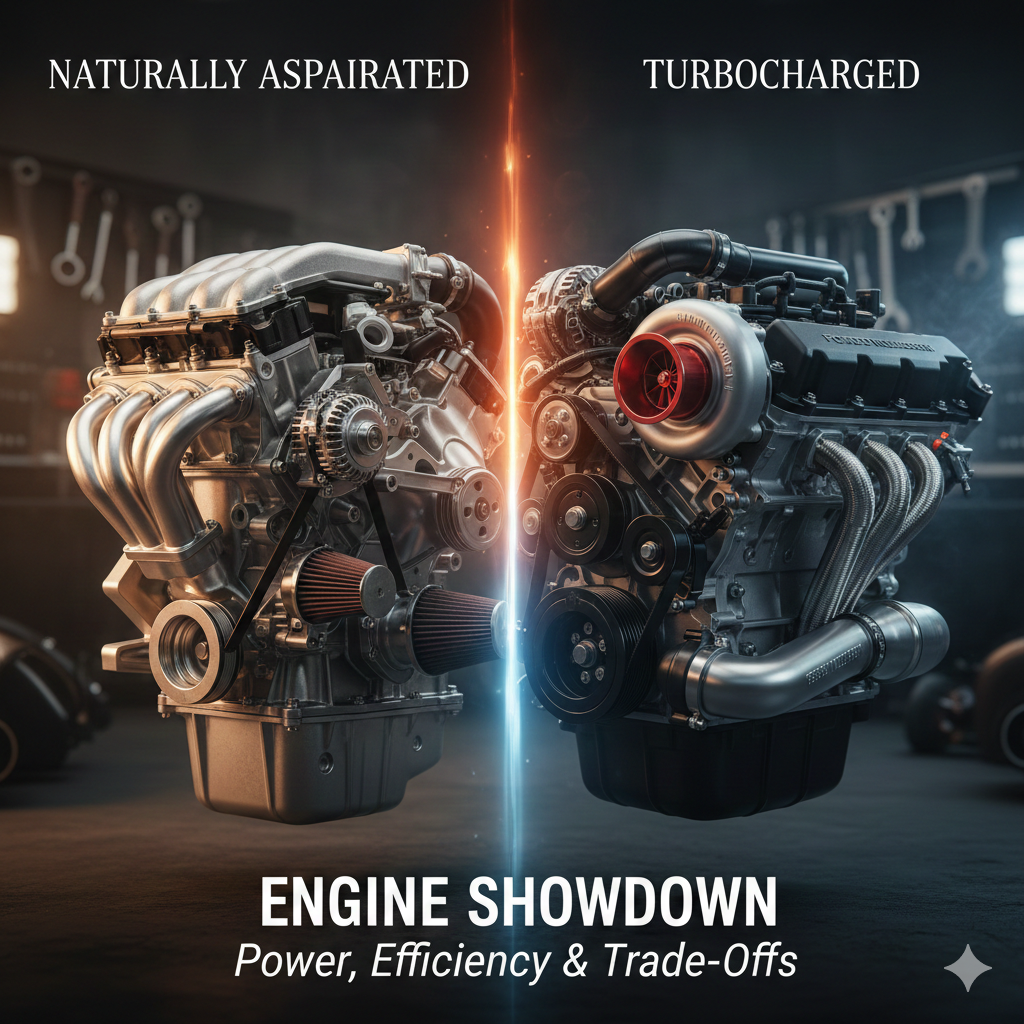
Imagine a 2.0L turbocharged engine delivering power comparable to a 3.0L naturally aspirated (NA) engine—but with a smaller, more fuel-efficient design. This is the power of forced induction. When debating naturally aspirated vs turbocharged engines, the choice often comes down to a balance of character and efficiency. While a smaller engine can perform on par with a larger one by harnessing exhaust gases, it introduces unique challenges like turbo lag and complex maintenance.
But what exactly sets these two engine types apart?
A naturally aspirated (NA) engine relies on atmospheric air intake—simply put, it pulls air into the cylinders using the pressure created by the engine’s own movements. It’s a straightforward design that offers immediate throttle response and smooth performance, but it’s also limited by the amount of air the engine can naturally draw in.
In contrast, a turbocharged engine uses exhaust-driven forced induction, where exhaust gases drive a turbine that forces more air into the engine. This process increases the air density in the cylinders, allowing the engine to burn more fuel and produce more power, making it more efficient and offering a significant boost in performance for the same engine size.
In this blog, we’ll dive into the trade-offs between NA and turbocharged engines, examining their performance, efficiency, and costs. Whether you’re considering which engine type is right for your car or just curious about the differences, we’ll explore how these engines stack up in the real world.
Core Definitions
Naturally Aspirated (NA) Engines
A naturally aspirated (NA) engine is one that relies purely on atmospheric pressure to fill its cylinders with air. As the engine’s pistons move up and down, they create a vacuum that pulls air into the intake manifold and into the combustion chamber. This process is straightforward and relies on the engine’s natural ability to draw in air, meaning the airflow into the engine is directly related to the engine’s displacement (the total volume of air the engine can move per cycle) and speed (how quickly the engine is spinning). The larger the engine displacement and the higher the engine speed, the more air it can draw in, and the more power it can produce.
However, the power of a naturally aspirated engine is limited by how much air can be pulled into the cylinders. As engine speed increases, it can pull in more air, but there’s a limit to how much atmospheric pressure can force air into the engine, which is why larger NA engines often produce more power—they have more capacity to draw in air.
Turbocharged Engines
A turbocharged engine takes things a step further by using forced induction. A turbocharger is a device powered by the engine’s exhaust gases. The exhaust gases spin a turbine, which drives a compressor that forces more air into the engine’s intake manifold. This process increases the air density, allowing more air (and consequently more fuel) to be burned during combustion. As a result, turbocharged engines can produce significantly more power than naturally aspirated engines of the same size.
The key advantage of a turbocharged engine is that it allows a smaller engine to achieve the same power output as a larger naturally aspirated engine by compressing the air before it enters the cylinders. The increased air density means the engine can burn more fuel and produce more power for a given displacement, making turbocharged engines more efficient in terms of power-to-size ratio.
Key Differences
The most notable difference between NA engines and turbocharged engines is the way they generate power. Turbocharging leads to higher power output for the same engine size because it forces more air into the combustion chamber, allowing the engine to burn more fuel and produce more energy. However, this increase in power typically comes at the cost of higher fuel flow, as more fuel is needed to match the increased air intake.
One of the main efficiency benefits of turbocharging comes through engine downsizing. Because a turbocharged engine can produce the same power as a larger NA engine, manufacturers can use a smaller engine that burns less fuel and emits fewer emissions, yet still offers strong performance. This downsizing not only improves fuel economy but also reduces the engine’s overall weight, which can further enhance the vehicle’s efficiency. However, these benefits are often indirect, as they depend on how well the engine is calibrated and the driving conditions.
In contrast, NA engines don’t benefit from the same level of efficiency or power potential. While they are simpler and often more reliable due to fewer components (no turbocharger, intercooler, or complex exhaust system), they are generally less fuel-efficient compared to turbocharged engines, especially in situations where higher power output is needed.
Why Manufacturers Moved to Turbo Engines
Context of Adoption
The shift from naturally aspirated (NA) engines to turbocharged engines has become increasingly prevalent in recent years, driven by both performance demands and regulatory pressures. In the past, turbocharged engines were often associated with complexity and reliability issues. However, significant advancements in engine technology, materials, and control systems have made turbocharged engines more practical, reliable, and efficient.
One major factor in this shift has been the drive for improved fuel efficiency. With rising fuel prices and stricter emissions regulations, manufacturers were faced with the challenge of producing vehicles that could offer better power and performance while consuming less fuel. Turbocharging allowed manufacturers to downsize engines—using smaller, more efficient powertrains that still delivered strong performance—by increasing the engine’s power output without needing a larger displacement. This downsizing not only helped reduce fuel consumption but also made cars lighter, which contributed to better overall efficiency.
In particular, gasoline direct injection (GDI) technology played a crucial role in making turbocharged engines more viable. Direct injection allows for more precise control over fuel delivery, making it possible to burn fuel more efficiently at different engine loads. This innovation helped turbocharged engines operate more smoothly while maintaining high power output and improving fuel efficiency, addressing many of the early reliability issues associated with turbo technology.
Moreover, improved materials used in the construction of turbochargers, such as heat-resistant alloys and ceramic bearings, have increased the durability and performance of turbocharged engines. As turbochargers began to withstand higher temperatures and pressures, they became more reliable for everyday use, making them a more attractive option for mainstream vehicles.
Turbo Technology Advancements
The evolution of turbocharger technology has also played a crucial role in the widespread adoption of turbocharged engines. Early turbo systems suffered from lag, meaning there was a delay in power delivery as the turbocharger spun up. This was particularly noticeable at low engine speeds, where the turbocharger would take time to build enough boost pressure for maximum power.
However, modern turbocharged engines have benefited from significant advancements in turbo design and boosting technology. For example, the introduction of twin–scroll turbos allowed for faster, more efficient boost buildup by dividing the exhaust flow into two separate channels, reducing lag and improving performance at lower RPMs. Lower–friction bearings, such as ball bearings, further reduced turbo lag by allowing the turbo to spin up more quickly, enhancing throttle response and overall engine performance.
Perhaps one of the most important developments in turbocharged engine technology has been the integration of electric boost—known as e-boosting. With electric turbochargers, turbochargers can now provide boost almost instantly, without relying solely on exhaust gases to spool the turbine. This electric-assisted boost significantly reduces turbo lag, offering immediate power delivery even at low engine speeds. The combination of e-boosting and other advanced turbo technologies has allowed turbocharged engines to match or even exceed the performance of naturally aspirated engines, while maintaining the fuel efficiency and downsizing benefits that initially drove their adoption.
Thanks to these innovations, turbocharged engines are now seen as a highly efficient and reliable option for modern vehicles, providing the best of both worlds: high power output and improved fuel economy. The shift towards turbocharging is no longer just about boosting performance, but also about meeting the demand for more eco-friendly and fuel-efficient vehicles in today’s market.
The Performance Trade-offs
Throttle Response & Turbo Lag
One of the most noticeable trade-offs of a turbocharged engine is turbo lag. Turbo lag refers to the delay in power delivery when the throttle is pressed, particularly at lower engine speeds. This happens because, unlike a naturally aspirated engine that immediately uses the atmospheric pressure to fill the cylinders, a turbocharged engine needs time for the turbocharger to spool up and generate the boost needed for additional power.
At low RPMs, the turbo isn’t spinning fast enough to provide the extra air (and fuel) required for maximum power output, which can lead to a noticeable delay in throttle response. This is particularly evident during quick acceleration or when you suddenly press the gas pedal. Early turbo systems had more significant turbo lag, which often resulted in a somewhat sluggish response when drivers wanted immediate power.
However, manufacturers have developed several techniques to address this issue. Modern turbocharged engines incorporate advanced turbo designs and transmission behavior that help minimize lag. For example, adjusting transmission programming to keep the engine RPM higher during acceleration helps maintain turbo efficiency, allowing the engine to reach higher RPMs more quickly and reduce lag. Additionally, variable valve timing and improved turbo compressor designs can help reduce the time it takes for the turbo to spool up and provide boost, improving overall throttle response.
Modern Turbo Technologies
To further reduce turbo lag and enhance overall engine performance, several modern turbo technologies have been developed:
- Twin-Scroll Turbos: A twin-scroll turbo uses two separate exhaust pathways, which allows for better exhaust gas flow management. This design enables faster spool times by directing exhaust gases more efficiently into the turbo. It helps improve low-end power delivery and reduces turbo lag, especially at lower engine speeds, making turbocharged engines feel more responsive.
- Lower-Friction Bearings: Traditional turbochargers use journal bearings that rely on oil to reduce friction. Newer turbo systems incorporate ball bearings, which provide less friction and allow the turbo to spool up faster. This reduces the time it takes for the turbo to reach its optimal boost, further improving throttle response and overall performance.
- Electrically Assisted Boosting (e-Boosting): Some of the latest turbocharged engines include electric turbochargers that use an electric motor to spin the turbo before exhaust gases can do so. This allows for instant boost, eliminating turbo lag entirely. By using electricity to assist in spool-up, e-boosting enables a quicker response, especially at lower RPMs, and provides more immediate power delivery.
These technologies have made turbocharged engines much more capable and competitive with naturally aspirated engines, which are typically known for their immediate throttle response.
Turbo vs NA Performance
While modern turbocharged engines have made significant strides in reducing turbo lag, naturally aspirated (NA) engines still hold a distinct advantage in terms of immediate throttle response. Since NA engines don’t rely on a turbo to force air into the cylinders, the power delivery is more direct and instantaneous. When you press the throttle, the engine immediately responds without any delay, making NA engines feel smoother and more predictable, particularly in everyday driving situations where quick throttle inputs are frequent.
However, while NA engines offer more immediate throttle response, they tend to have a lower peak power output compared to turbocharged engines. Turbocharged engines, even at smaller displacements, can generate higher peak power by forcing more air into the engine, allowing them to produce more power per unit of engine size. This means that while turbo engines may have a slight delay in power delivery, they compensate with higher peak horsepower and torque, making them more powerful overall, especially at higher speeds or when driving aggressively.
In summary, NA engines excel in providing smooth, immediate throttle response, making them ideal for everyday driving where quick reactions are needed. Turbocharged engines, on the other hand, offer superior peak power and efficiency, though they may still experience a small delay in power delivery, which is being steadily reduced with advancements in turbo technology. Whether you prioritize instant responsiveness or higher power output, each engine type has its own unique strengths and trade-offs in performance.
Efficiency – What Research and Tests Say
Engineering Basis for Efficiency Gains
Turbocharging offers significant efficiency benefits, especially through engine downsizing. By using a smaller turbocharged engine to produce the same amount of power as a larger naturally aspirated (NA) engine, manufacturers can reduce both fuel consumption and emissions. The smaller engine requires less fuel to operate, yet the addition of a turbocharger allows it to perform at a higher level of power output than a comparable NA engine.
One of the key reasons turbocharged engines are more efficient is due to the reduction in throttling losses. In a naturally aspirated engine, the throttle must open wider to allow more air into the engine as power demand increases, which causes inefficiencies, especially at partial load conditions. With a turbocharged engine, the forced induction means the engine operates at a higher load, making it more efficient even at lower throttle openings. This leads to reduced fuel wastage during acceleration.
Additionally, turbocharged engines benefit from lower friction losses. Turbocharging allows for the use of smaller components, such as smaller bearings and cylinders, which naturally result in less friction compared to larger, more complex NA engines. This reduction in friction translates to improved engine efficiency, which helps improve overall fuel economy.
Real-World Fuel Economy Testing
Real-world fuel economy results support the notion that turbocharged engines often outperform NA engines in fuel efficiency, particularly during highway driving. A study by Car and Driver, which analyzed over 730 real-world drives, found that turbocharged vehicles typically exceeded their EPA highway ratings by 3.1% on average. In contrast, naturally aspirated vehicles only met their EPA ratings on average, with many falling short. Notably, 65% of turbocharged models in the study topped their EPA highway ratings, highlighting the fuel-saving potential of turbocharging during steady-state cruising on highways.
In terms of combined fuel economy, Emissions Analytics testing, summarized by Car and Driver,which analyzed over 730 real-world drives– showed that turbocharged vehicles outperformed their EPA combined labels by about 0.6%, while NA vehicles fell short by around 2.3%. This further suggests that while turbocharged engines provide better efficiency in highway conditions, their advantage can be diminished in stop-and-go traffic, where their fuel savings are reduced due to frequent acceleration and deceleration.
The Impact of Downsizing with Turbocharging
One of the most significant benefits of turbocharging is engine downsizing. By replacing larger NA engines with smaller turbocharged engines, manufacturers can achieve significant fuel economy gains while maintaining, or even improving, performance. The SAE (Society of Automotive Engineers) reports that turbocharging can enable 30% downsizing of an engine’s displacement, while still achieving the same power output. This downsizing helps to improve fuel economy by 8-10% on average, thanks to the smaller engine’s reduced fuel requirements.
Additionally, research from the ICCT (International Council on Clean Transportation) has shown that downsizing with turbocharging can reduce fuel consumption by up to 21%. The combination of reduced engine displacement and turbocharging leads to lower fuel consumption, especially during light-load driving conditions, where the smaller engine can operate efficiently without sacrificing power.
The ICCT also notes that turbocharged engines allow for more efficient engine operation, as they can run at higher brake mean effective pressure (BMEP), which improves fuel economy by reducing heat-transfer losses and friction losses. The smaller turbocharged engine is able to work harder without wasting energy, making it more fuel-efficient overall.
In summary, turbocharging offers impressive efficiency benefits through downsizing, leading to improved fuel economy, particularly during highway driving and light-load conditions. However, it’s important to note that the real-world fuel economy gains depend on factors such as vehicle calibration, driving style, and engine design, so the results can vary from one car to another. Still, the evidence suggests that turbocharged engines can provide substantial fuel savings, especially when paired with modern engine technologies.
Reliability, Durability, and Ownership Costs
Complexity and Durability
While turbocharged engines offer impressive performance and efficiency benefits, they also come with added complexity. The integration of turbochargers, intercoolers, and other forced induction components introduces more parts and systems into the engine, each with specific maintenance needs. Turbocharged engines operate at higher pressures and temperatures compared to naturally aspirated (NA) engines, putting more strain on various components.
The turbocharger itself is subjected to extreme heat and rotational forces, which makes it a critical component in terms of durability. As the turbo spins, it generates a significant amount of heat, which can stress the engine’s oil and cooling systems. Oil quality and cooling maintenance become crucial in keeping turbocharged engines running smoothly. If the oil is not properly maintained, or if the cooling system is not functioning optimally, it can lead to premature wear of the turbocharger, and potentially cause engine damage over time.
In contrast, naturally aspirated engines are generally simpler, with fewer components and less stress on parts. They don’t rely on forced induction, which makes them less complex and more forgiving in terms of maintenance. While they still require regular oil changes and cooling maintenance, the demands on the engine are not as high, leading to fewer potential issues over the engine’s lifespan.
Ownership Costs
The initial cost of a turbocharged engine is often higher than that of a naturally aspirated engine. This is due to the additional components like turbochargers, intercoolers, and specialized exhaust systems. Turbocharged engines also require more advanced materials to withstand the higher pressures and temperatures generated during operation, which can contribute to increased manufacturing costs.
However, the downsizing effect of turbocharged engines often leads to savings in the long run. Smaller engines with turbocharging can replace larger engines (e.g., replacing a V6 with a turbocharged I4) while still delivering similar or even superior power output. This downsizing results in lower fuel consumption and better fuel economy, which can offset the higher upfront cost of the engine over time. In addition, smaller engines tend to be lighter, which can reduce the overall vehicle weight, leading to potential savings in areas like suspension wear and tire replacement.
Moreover, many manufacturers use turbocharged engines to achieve better emissions compliance and fuel efficiency standards, which can make them an attractive choice for buyers looking to save on fuel costs over the life of the vehicle.
Long-Term Reliability
In terms of long-term reliability, modern turbocharged engines have improved significantly over the years, thanks to advancements in materials, design, and technology. Modern turbochargers are much more durable than earlier versions, and many are now equipped with better lubrication systems and advanced cooling techniques that help reduce wear. As long as regular maintenance—such as oil changes, proper coolant levels, and attention to the turbocharger system—is maintained, modern turbocharged engines can last just as long as naturally aspirated engines.
However, turbocharged engines can still be sensitive to poor maintenance practices. For example, failing to change the oil at regular intervals can cause turbocharger failure due to poor lubrication, and neglecting the cooling system can lead to overheating and engine damage. Because turbocharged engines work under higher stress than NA engines, proper care is essential to ensure their longevity.
Naturally aspirated engines, by comparison, are generally more forgiving and easier to maintain. With fewer moving parts and no forced induction system to worry about, they are less prone to expensive repairs and more reliable over time. While they may not offer the same level of performance or efficiency as turbocharged engines, their simpler design means fewer components can fail, which can result in lower long-term maintenance costs.
Advanced Modern Developments in Turbocharged Engines
Miller Cycle & Boosted Engines
In the quest for better fuel efficiency, one of the most advanced developments in turbocharged engines is the Miller cycle, which has been increasingly integrated into boosted engines. The Miller cycle is a unique engine cycle that uses variable valve timing to decouple compression and expansion. Unlike traditional engines where the compression and expansion phases are tightly linked, the Miller cycle delays the closure of the intake valve, reducing the time the air is compressed.
This process helps to reduce the work required during compression, which improves overall fuel efficiency. By lowering the compression ratio without sacrificing power output, the Miller cycle allows the engine to burn fuel more efficiently and run at a higher brake mean effective pressure (BMEP)—the pressure inside the cylinders during combustion. When paired with turbocharging, the Miller cycle helps boost the engine’s power output by forcing more air into the engine, enabling it to produce more power while still benefiting from the efficiency improvements brought about by the cycle.
The combination of the Miller cycle and turbocharging is a powerful tool in optimizing both performance and efficiency. It allows turbocharged engines to run at higher compression ratios than conventional engines, making them more efficient at converting fuel into power. At the same time, turbocharging ensures that the engine can still achieve high power output, compensating for the reduced compression.
E-Boost & 48V Electrical Systems
Another breakthrough in modern turbocharged engine technology is the integration of 48V electrical architectures and e-boosting systems. These innovations have significantly improved turbocharged engines by addressing one of the most common drawbacks of traditional turbocharging—turbo lag.
E-boosting utilizes electric motors to assist the turbocharger in generating boost pressure more quickly, especially at low engine speeds. In traditional turbocharged engines, turbo lag occurs when the turbo has to spool up, causing a delay in power delivery. E-boosting eliminates much of this lag by using an electric motor to provide instant boost assistance, ensuring that the turbocharger starts working immediately without waiting for exhaust gases to spool it up.
48V electrical systems provide the necessary power for these electric turbochargers, as they are more efficient and capable of handling higher power demands than standard 12V electrical systems. By incorporating a 48V architecture, the vehicle can supply the required energy for the turbo system and other components (like the electric motor in hybrid setups), improving overall vehicle performance and efficiency. This system also enables further downsizing of the engine, as smaller, more efficient engines can now achieve higher power outputs without compromising performance. The ability to use electrically-assisted turbochargers and 48V systems also helps reduce fuel consumption, providing greater fuel efficiency at lower engine speeds, particularly in urban driving conditions where frequent acceleration and deceleration occur.
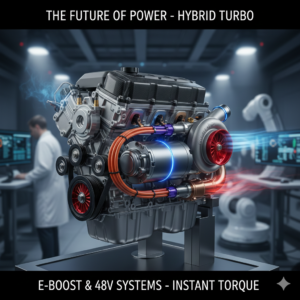
The result is a faster spool-up, instant boost, and overall more responsive performance in turbocharged engines, making them feel more like naturally aspirated engines in terms of throttle response, but with all the power and efficiency benefits of forced induction.
Conclusion
In conclusion, the choice between naturally aspirated (NA) and turbocharged engines comes down to a variety of trade-offs, each catering to different needs and preferences. NA engines offer immediate throttle response and simplicity, with fewer components that require maintenance. They are reliable, easy to maintain, and provide smooth, predictable performance, making them ideal for everyday driving where quick responses are more important than raw power. However, they tend to be less fuel-efficient and have lower peak power compared to turbocharged engines.
On the other hand, turbocharged engines offer the advantage of higher power output with smaller engine sizes, making them more efficient, especially for those looking to downsize and improve fuel economy. Turbocharged engines can provide stronger performance, but they come with the trade-off of added complexity. They require more maintenance, particularly for the turbocharger and cooling systems, and may experience turbo lag at lower engine speeds, though newer technologies are addressing this issue.
Ultimately, the right choice depends on your driving habits, vehicle needs, and maintenance preferences. If you prioritize fuel efficiency and higher performance in a smaller engine, a turbocharged engine may be the best option. However, if you’re looking for simplicity, reliable performance, and ease of maintenance over the long term, an NA engine may better suit your needs.
Before deciding, consider how much you value performance over fuel economy, how often you drive, and whether you’re ready for the added complexity and potential maintenance costs of a turbocharged engine. Both engine types have their strengths, and by understanding their trade-offs, you can make an informed decision that best fits your driving style and lifestyle.
Frequently Asked Questions
1. What is the main difference between a naturally aspirated (NA) engine and a turbocharged engine?
A naturally aspirated (NA) engine relies on atmospheric pressure to draw air into the cylinders, while a turbocharged engine uses a turbocharger to force more air into the engine, increasing power and efficiency. Turbocharged engines can achieve more power with smaller displacement engines compared to NA engines.
2. Are turbocharged engines more fuel-efficient than naturally aspirated engines?
In general, turbocharged engines tend to be more fuel-efficient, especially on highways and under steady loads, due to their ability to downsize the engine while maintaining or improving power output. However, real-world fuel economy can vary depending on driving style, vehicle calibration, and driving conditions.
3. Why do turbocharged engines experience turbo lag?
Turbo lag occurs because it takes time for the turbocharger to spool up and generate boost, especially at low engine speeds. This delay in power delivery can be noticeable during quick acceleration. Modern turbo technologies, like e-boosting and twin-scroll turbos, have helped reduce lag by allowing the turbo to spin up more quickly.
4. Are turbocharged engines less reliable than naturally aspirated engines?
Turbocharged engines are generally more complex and can experience higher stress due to the increased temperatures and pressures in the turbo system. They require more maintenance, especially for the turbocharger and cooling systems. However, modern turbo engines are durable if properly maintained, whereas naturally aspirated engines are simpler and typically more forgiving in terms of long-term reliability.
5. Which engine is better for daily driving, NA or turbocharged?
The choice depends on your preferences. Naturally aspirated engines provide smoother throttle response and are often preferred for daily driving, as they are simpler and require less maintenance. Turbocharged engines, while offering higher performance and better fuel efficiency, can be more complex and require more frequent maintenance, especially if not properly maintained.