
 By Rehan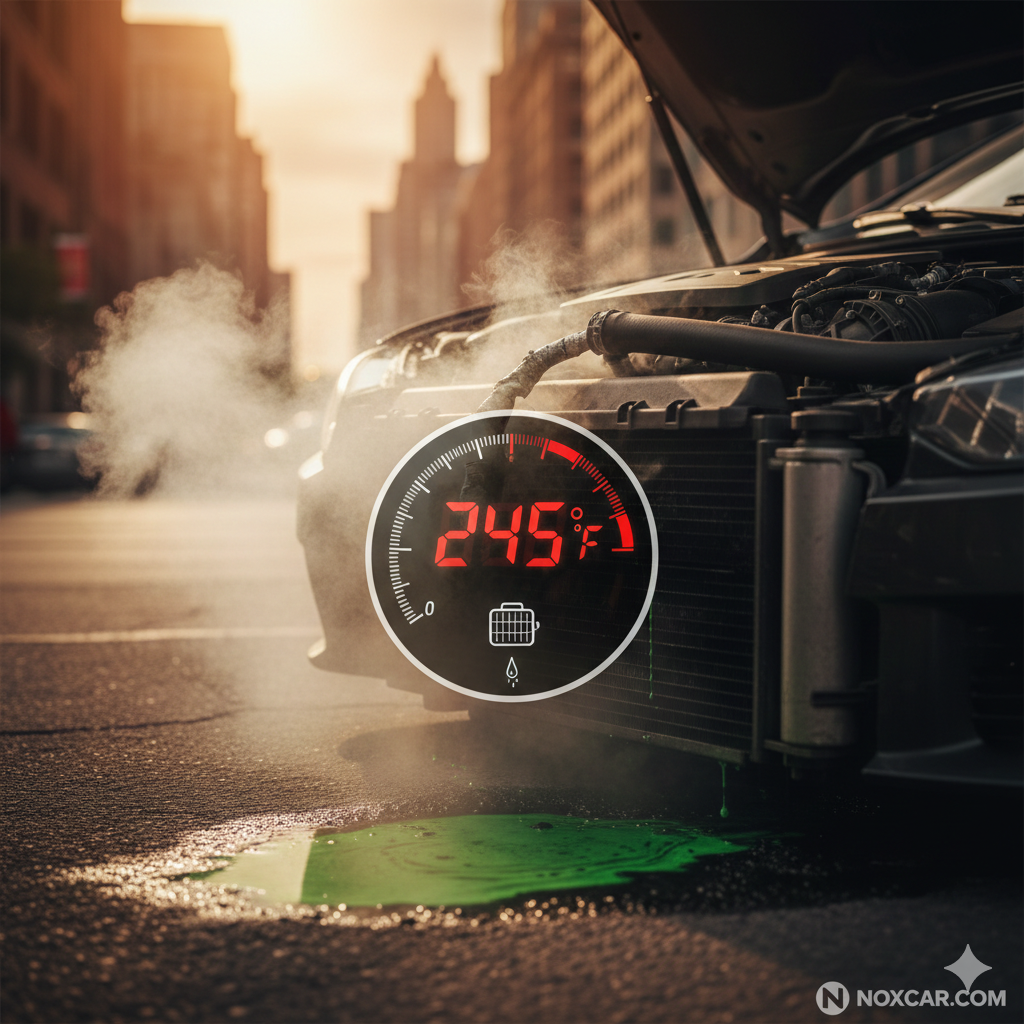
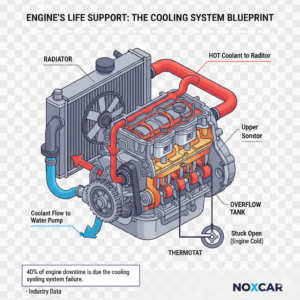
Imagine you are trapped in a claustrophobic rush hour on the Chicago Loop. The summer sun is baking the asphalt, and you are surrounded by the shimmering exhaust of a thousand idling cars. Suddenly, your eyes drift to the dashboard: the temperature needle is creeping steadily toward the red zone. This is the moment most drivers realize that their “radiator” is not just a part—it is the central hub of a sophisticated life-support network for the engine.
The stakes of ignoring this system are incredibly high. According to the latest data, car cooling system failure accounts for 25% of all major engine failures reported annually. As an automotive journalist and educator, I’ve seen how quickly a minor leak can turn into a scrapped engine block. Understanding the following five truths can save your vehicle from a catastrophic mechanical “flatline.”
Quick Summary: The 230°F Rule Your engine is designed to operate between 195°F and 220°F. Once you cross 230°F, oil loses its lubricating properties and metal begins to warp. Cooling failure causes 25% of major engine deaths annually, but most can be avoided by a $130 flush every 3–5 years.
1. The Silent Gridlock: Why Chicago’s Concrete is Killing Your Commute
There is a persistent myth that the most dangerous environment for an engine is a high-speed, long-distance road trip. In reality, the stop-and-go traffic of an urban environment like Lakeview or the Loop is a far more brutal mechanical “stress test.” This is due to the “Urban Heat Island” effect, where buildings and pavement absorb solar radiation and re-emit it, raising the ambient air temperature around your car.
In these conditions, your vehicle suffers from “The Traffic Heat Up.” Without the high-speed airflow of the highway to naturally cool the radiator, the system must rely entirely on its fans and the precise operation of the thermostat. Experimental data from the International Journal of Advances in Engineering and Management (IJAEM) reveals just how fragile this balance is: under heavy load, a malfunctioning or closed thermostat can trigger a 16% increase in engine temperature while simultaneously causing an 80% decrease in coolant flow rate. This combination is a recipe for instant overheating, turning a simple commute into a battle against thermal collapse.
-
The Symptom: Your car is overheating, but when you turn the heater on to “Full Blast,” it blows cold air.
-
The Verdict: This means there is an air pocket in the system or the coolant is so low it’s not reaching the heater core. This is an immediate “Pull Over” emergency.
2. The Maple Syrup Trap: Why a Sweet Scent is a Toxic Red Flag
If you catch a whiff of something resembling maple syrup while driving, do not assume there is a pancake house nearby. You are likely smelling vaporized ethylene glycol—the primary ingredient in engine coolant. While the scent is sugary, the reality is a toxic red flag for both your car and your health.
Coolant is a lethal chemical. Between 2015 and 2020, the National Poisoning Database System recorded over 10,000 cases of ethylene glycol poisoning in the United States alone. When you smell that sweetness, it means coolant is leaking and boiling off hot engine metal, releasing volatile organic compounds into the air you breathe. Mechanically, even a tiny pinhole leak prevents the system from maintaining the pressure required to raise the coolant’s boiling point. As the experts at Rohnert Park Transmission & Auto Repair warn:
“Don’t ignore this smell. While not immediately dangerous, coolant leaks get worse over time and can lead to overheating.”
3. The Point of No Return: Why 230°F Ends Your Engine’s Life
Your engine is designed to live in a “Goldilocks Zone” between 195°F and 220°F. Once you cross into the 230°F territory, you have entered a damage hierarchy that can destroy an engine in minutes:
- 230–250°F: Metal components expand beyond design tolerances and engine oil begins to lose lubricating efficiency.
- 250–275°F: This is the “Point of No Return.” Engine oil undergoes a chemical breakdown, losing its flash point and leaving metal surfaces unprotected. Aluminum components warp, and head gaskets—the critical seals between the engine block and head—fail.
- Above 275°F: The end of the line. You face seized pistons, cracked engine blocks, and a repair bill in the thousands.
When you consider that a professional coolant flush costs approximately $129.95, the financial logic is undeniable. Investing in preventive maintenance is the only way to avoid the “thousands” required for a full engine replacement.
| Temperature | Engine Status | Risk Level |
|---|---|---|
| 195°F – 220°F | Goldilocks Zone | Optimal |
| 230°F – 245°F | Oil “Thins” & Head Gaskets Stress | Warning |
| 250°F – 270°F | The Point of No Return: Cylinder heads warp | Critical |
| 275°F+ | Seized Pistons / Cracked Block | Total Failure |
4. The Decade Hazard: Navigating the High-Stakes 10-Year Rule
If your car is 10 years or older, you are operating in a zone of increased statistical risk. Roadside data from AAA indicates that vehicles in the “double-digit” age bracket are twice as likely to break down and four times more likely to require a tow.
While newer cars might suffer from flat tires or dead batteries, older vehicles are specifically targeted by cooling system decay. The most prominent failure points for these veterans are the radiator, the thermostat, or the water pump seals. As Greg Brannon, AAA’s Director of Automotive Engineering, points out, skipping the shop to save money often backfires:
“Drivers may skip taking their car in for an inspection, hoping to avoid an expensive repair bill. But, when you factor in the cost of an interrupted trip, having a vehicle inspected and proactively repaired will cost much less in the long run.”
-
Pre-2000 Vehicles: Usually require IAT (Inorganic Acid Technology)—the traditional green stuff.
-
Modern Vehicles (Post-2000): Use OAT or HOAT (Orange, Pink, or Blue).
-
The Golden Rule: Never mix colors. Mixing IAT and OAT creates a chemical “sludge” that acts like a blood clot in your engine’s veins.
5. Precision Thermal Management: The “Rocket Science” Under Modern Hoods
Modern engine cooling has evolved into a field of extreme engineering. As manufacturers downsize engines and add high-boost turbochargers to meet emissions standards, they create “high thermal density.” These small engines generate massive amounts of heat that standard mechanical water pumps cannot handle at idle.
To manage this, engineers have turned to “Rocket Science” features. We now see electric water pumps controlled by the Engine Control Module (ECM) that can modulate flow based on precise engine load rather than just engine RPM. Many turbocharged engines even utilize oil jets that spray a stream of engine oil directly onto the undersides of the piston domes to prevent them from melting under boost. This complexity means your cooling system is no longer a “dumb” loop of water; it is a highly calibrated thermal management system where a single failed sensor can disrupt the entire engine’s health.
Noxcar DIY: The “Weep Hole” Test Most water pumps have a small “weep hole” on the bottom of the housing. If you see crusty white or green residue around this hole, the internal seal has failed. This is your early warning to replace the pump before it seizes and snaps your timing belt.
The Forward-Looking Conclusion: Respect the Gauge
Maintaining your engine’s life support system doesn’t require a degree in mechanical engineering—it requires a commitment to the BET strategy: Battery, Engine, and Tires. By checking your coolant levels monthly, inspecting hoses for swelling, and respecting the manufacturer-recommended flush intervals, you move from the role of a passive passenger to an empowered owner.
The next time you catch a sweet scent on the breeze or notice a slight flicker on your dashboard temperature gauge, ask yourself: Is this a minor nuisance, or is it a life-saving warning from your engine? Your answer will determine whether you reach your destination or end up on the back of a flatbed.
Frequently Asked Question
1. What is the most common cause of a car cooling system failure?
The most frequent culprit is a coolant leak, often stemming from a cracked radiator, a perished hose, or a failing water pump seal. Over time, the constant pressure and heat cycles cause rubber and plastic components to become brittle and eventually fracture, leading to a rapid loss of pressure and overheating.
2. Can I drive my car if it starts to overheat?
No. If your temperature gauge enters the red zone or you see steam, you should pull over immediately. Driving even a few extra miles can cause the aluminum cylinder heads to warp or the head gasket to blow, turning a simple repair into a multi-thousand-dollar engine replacement.
3. How often should I flush my car cooling system?
While older vehicles required a flush every 2 years, most modern manufacturers recommend a coolant exchange every 5 years or 100,000 miles. However, if you notice the fluid looks cloudy, rusty, or has debris floating in it, you should have it serviced immediately regardless of mileage.
4. Why does my car smell like maple syrup?
A sweet, syrupy scent is the distinct smell of vaporized ethylene glycol (coolant). If you smell this inside or outside your vehicle, it indicates a leak is spraying onto a hot engine component. This is a “toxic red flag” that the system’s integrity is compromised and an overheat is imminent.
5. Why is my car overheating in stop-and-go traffic but fine on the highway?
This usually indicates a failure of the electric cooling fan or a partially clogged radiator. On the highway, natural airflow is enough to cool the engine. In traffic, your car relies entirely on the fan to pull air through the radiator fins; if that fan fails, the engine will heat up rapidly.
The Car Cooling System Survival Guide
-
The 230°F Red Line: Your engine is designed for the “Goldilocks Zone” (195°F–220°F). Once you hit 230°F, you are in the danger zone for structural warping.
-
The Maple Syrup Warning: Never ignore a sweet scent in or around your car. It’s vaporized ethylene glycol, a sign of a high-pressure leak that could lead to a “mechanical flatline.”
-
Traffic is the Real Test: Urban stop-and-go driving (like the Chicago Loop) is harder on your car cooling system than highway cruising because it relies entirely on fans rather than natural airflow.
-
The 10-Year Risk: If your vehicle is over a decade old, you are statistically four times more likely to need a tow due to cooling component decay. Proactive inspection is mandatory.
-
Economics of Prevention: A $130 coolant flush is an investment that protects you from a $7,000 engine replacement bill.
-
The Heater Test: If your car is running hot but the interior heater is blowing cold air, pull over immediately. You have a massive air pocket or critical coolant loss.