
 By Rehan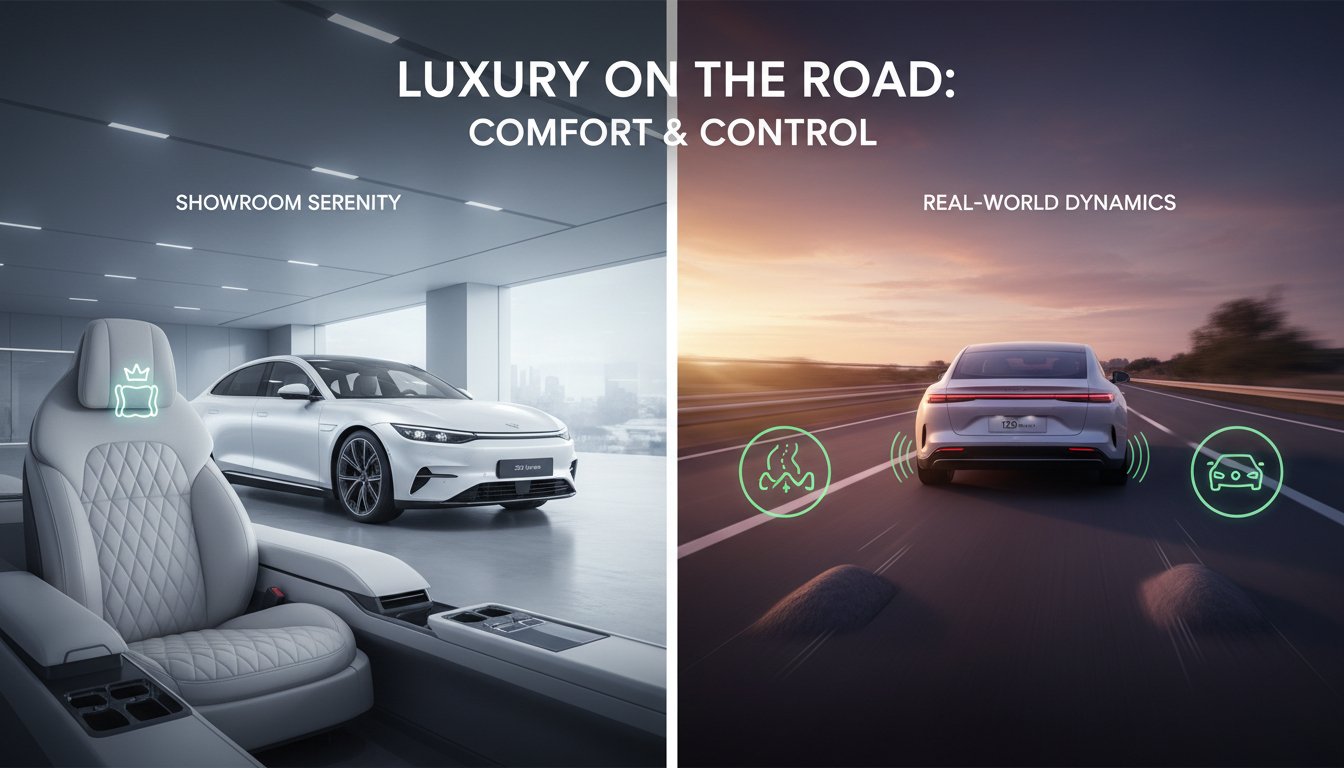
Every car buyer knows the drill: you settle into the driver’s seat at the dealership, adjust the lumbar, and inhale the “new car smell.” The showroom is quiet, the interior feels premium, and the seats are plush. But fast forward three months, cruising down the highway at 70 mph, and you’re left fighting a mysterious high-pitched hiss, fatigued, and wondering why your back aches.
This is the “Showroom Trap”—the stark contrast between Static Comfort, the initial feeling of well-being when parked, and Dynamic Discomfort, the reality of how a car comfort and handling perform when in motion. Research by human factors specialists, like Xiaojuan Wang, and real-world testing of models like the Honda Elevate, reveal that a car can look like a cutting-edge 2025 model but offer an experience that feels, frankly, like a relic from the early 2000s.
In this article, we’ll break down five surprising truths about modern vehicle design, based on human factors and engineering insights. These findings might just change how you evaluate your next car purchase.
1. The High-Frequency Paradox: Why Electric Vehicles (EVs) Can Be More Annoying Than Gas Cars
It sounds counter-intuitive: how could removing the rumbling engine of a gas car make the ride more annoying? The answer lies in the concept of the “masking effect.” In traditional vehicles, the low-frequency hum of the engine blankets other, more irritating noises. However, in an electric vehicle (EV), without the engine noise to cover them, high-frequency electrical whines from the motor and components become far more noticeable.
Why does this matter?
-
In a conventional vehicle, noises from the tires or wind are typically masked by the engine’s low-frequency hum.
-
In an EV, the absence of that engine sound allows sharper, high-pitched frequencies—such as motor whines—to become more prominent, creating a discomforting experience for passengers.
Interestingly, research suggests that a loud car with significant vibration often feels less annoying because the visceral movement masks the sound. In contrast, a “quiet” EV amplifies every tiny noise, grating on the nerves. As Xiaojuan Wang notes, “Driveline sound in electric cars was usually of a lower level but perceived as more annoying than the powertrain sound of combustion cars.”
Furthermore, EVs expose road noise much earlier. In these vehicles, tire noise becomes audible at speeds as low as 20 km/h (12 mph), where a gas engine would typically mask it.
2. The “Stiff” Misconception: Why a Little Body Roll Enhances Car Handling
Many car ads boast about “flat cornering” and “stiff suspension,” but in reality, these features can undermine true vehicle communication. For seasoned drivers, a small amount of body roll—when the car leans during a turn—is highly informative. It’s how the car communicates the proximity of its tires to the limit of traction.
Why does this matter?
-
True vehicle “handling” isn’t about rigidity; it’s about the feedback you get from the car. A car with intuitive body roll helps the driver “feel” the road and adjust their driving accordingly.
-
Take the modern muscle car segment: cars like the Mustang GT and Camaro SS demonstrate how vehicle suspension setups can vary in their approach to handling. While the Camaro SS may feel “buttoned down” and controlled, the Mustang GT allows a bit more leeway, offering more feedback to the driver.
Heavy steering, like the kind found in the 2015 Toyota Corolla, is often mistaken for sportiness. However, weight alone isn’t feedback. True feedback comes from the steering wheel moving or vibrating over bumps, helping the driver understand where the wheels are pointed without looking.
3. The Showroom Seat Trap: Comfort is a Moving Target
A seat that feels like a cloud while stationary can become a nightmare during long drives. Take the Honda Elevate—it boasts a 18.5-inch driver seat base and a 20-inch width. However, these static measurements don’t reveal the true comfort during movement.
Why does this matter?
-
The real discomfort comes from induced body movements while driving. Our bodies are hypersensitive to vibrations, especially in the 4–6 Hz range, which can trigger internal organ resonance.
-
Lateral movements (side-to-side swaying) are even worse. The human body isn’t prepared for horizontal motion in the same way it is for vertical bounce, so we constantly make micro-adjustments to stay stable, which causes fatigue.
Lack of lateral support means that your muscles are working overtime just to keep you centered, making long trips feel exhausting, even if the seat is initially comfortable.
4. The 70-MPH Cuckoo Clock: How Small Design Flaws Ruin Refinement
In the world of NVH (Noise, Vibration, and Harshness), small oversights can have huge consequences. The Honda Elevate offers a quiet cabin at idle (30 dB), but once it hits 3,000 RPM, it spikes to a harsh 55 dB, causing discomfort.
Why does this matter?
-
Small design flaws—like the **Elevate’s large wing mirrors—create unnecessary aerodynamic drag, causing a loud “hiss” at highway speeds as air squeezes through the gap between the mirror and A-pillar.
-
Even small differences in decibels can be enough to disrupt a comfortable driving experience. For instance:
Vehicle Decibel Level (dB) Subjective Experience Honda Elevate 55 dB (at 3k RPM) Harsh engine clatter; mirror hiss Toyota GR86 74 dB Engine sounds like a blender Mazda MX-5 Miata 79 dB Noise like an idling jet engine
Even a 5 dB difference can turn a pleasant conversation into a shout.
5. The Practicality Paradox: Why the Best Sports Car Has a Glovebox
When comparing “pure” sports cars, the spec sheet alone doesn’t reveal the winner. For instance, while the Mazda Miata and Toyota GR86 hit 60 mph in roughly 5.4 seconds, the GR86 offers more practicality—something that truly matters for daily driving.
Why does this matter?
-
The Miata, with its hyper-focus on driving purity, lacks basic storage spaces, making it inconvenient for real-world use. Meanwhile, the GR86 includes features like a glovebox, rear seats for small items, and other usable cubbies.
This “Practicality Paradox” underscores the importance of designing a car that accommodates the driver’s lifestyle, not just their thirst for speed.
Conclusion: The Future of the Feel-Good Drive
The automotive industry is evolving beyond spec-sheet wins and toward human-centric design, focusing on ride comfort, noise control, and overall driving experience. As we continue to refine car design, the goal is to reduce annoying high-frequency whines, enhance comfort during movement, and improve overall noise management.
As cars become quieter and more advanced, we must consider whether we’ll miss the very mechanical noise that once made a car feel alive.
Frequently Asked Questions
- What is the “Showroom Trap” in car buying?
The “Showroom Trap” refers to the false sense of comfort that comes from sitting in a car at the dealership. While the car may feel comfortable and premium in a stationary setting, driving it over time may reveal discomfort due to factors like vibrations, road noise, and seat support issues. - Why are electric vehicles (EVs) noisier than gas-powered cars?
EVs are generally quieter because they don’t have the rumbling engine of traditional gas-powered cars. However, this silence can expose high-frequency noises from motors and electrical components that would otherwise be masked in combustion engine cars. These noises can be more annoying because they become more noticeable without the engine hum. - Is body roll in a car a bad thing?
Not necessarily. A small amount of body roll in a car is actually beneficial for giving the driver feedback on the car’s handling. It helps you understand the proximity of the tires to the limit of traction, making it easier to control the car, especially when cornering. - Why do some car seats feel comfortable in the showroom but become uncomfortable on long drives?
Car seats can feel comfortable when stationary, but during long drives, poor lateral support or vertical vibrations can lead to discomfort. Our bodies are more sensitive to certain vibrations, and without proper support, your muscles have to work harder to keep you stable, which leads to fatigue. - How do small design flaws in a car affect driving comfort?
Small oversights like aerodynamic design flaws or poor sound insulation can significantly affect a car’s comfort. For example, wing mirrors that create wind noise or a poorly designed powertrain can lead to increased noise levels inside the cabin, which can become distracting and uncomfortable during long drives. - Why do some sports cars have practical features like glove boxes?
While sports cars often prioritize performance over comfort, the best driving experiences also consider the driver’s real-world needs. Having practical features like gloveboxes or storage space ensures the car is usable in daily life, not just on the racetrack. - What should I look for when evaluating a car’s comfort?
Look beyond just the static features like seat padding and interior design. Pay attention to the car’s NVH (Noise, Vibration, and Harshness) performance, how it handles road vibrations, the feedback from the suspension system, and whether it supports your body during movement while driving. - What is NVH, and why is it important in modern car design?
NVH stands for Noise, Vibration, and Harshness, a critical aspect of vehicle design that measures the comfort and quietness of a car. Good NVH management ensures a smooth, quiet ride by reducing unwanted noise, minimizing vibrations, and making the overall driving experience more pleasant. - Can electric vehicles offer the same driving comfort as gas-powered cars?
While electric vehicles are becoming increasingly refined, there are still challenges related to road noise and motor whine. However, manufacturers are making strides in improving EV comfort by using better soundproofing, optimizing motor designs, and addressing high-frequency noises to enhance the driving experience. - How can car manufacturers improve comfort in future vehicles?
Manufacturers are focusing on human-centric designs, improving NVH control, optimizing seat ergonomics, and using materials that reduce road noise and vibrations. As electric and autonomous vehicles evolve, manufacturers will continue to refine these aspects to create smoother, more comfortable driving experiences.